Showing posts with label Treatment. Show all posts

7 Prostate Cancer Treatments Up To Date

Updated here are the seven (7) prostate cancer treatments:
1. The Gold-silica Nanoshell Infusion Treatment
2. Anti-sMIC Immunotherapy Antibody Therapy
3. Prostate Gel Spacer
4. Ultra-hypofractionated Stereotactic Body Radiotherapy (SBRT)
5. Olaparib
6. MKC8866
7. Focal Cryotherapy

The Gold-silica Nanoshell Infusion Treatment

Gold-silica nanoshell infusion is a cancer therapy invented at Rice University that allows for a focused therapy that treats the cancer while sparing the rest of the prostate, thus preserving a patient's quality of life by reducing unwanted side effects, which could include erectile dysfunction and/or the leakage of urine.

The treatment uses tiny silica spheres with a thin outer layer of gold, are called nanoshells. They are about 50 times smaller than a red blood cell, which Halas invented them at Rice in 1997. The cancer cells are destroyed by heating nanoshells with a low-power near-infrared laser. This method of destroying cancer cells could pass harmlessly through healthy tissue.
 

Anti-sMIC Immunotherapy Antibody Therapy

Dr. Jennifer Wu, Ph.D., Northwestern University and her research team have been investigating the mechanisms driving prostate cancer progression and developing novel treatments and models to combat metastasis for the past 15 years.

they discovered that cancer cells are able to bypass immune cells and survive. During the early stage of cancer development, prostate cells will start to express MIC. The primary function of MIC is to affect the immune cells. Cancer cells release a soluble form of MIC, called sMIC to bypass immune surveillance. Thus, Anti-sMIC Immunotherapy Antibody Therapy is developed to target sMIC. Currently, Dr. Wu and her colleagues are working toward bringing this anti-sMIC antibody from pre-clinical to clinical use in humans.

Prostate Cancer Gel Spacer

Radiotherapy for prostate cancer treament can be highly effective, it uses high-energy X-rays are targeted at the prostate, killing cancer cells and preventing them from spreading. Nevertheless, due to the close proximity, nearby healthy organs can be affected resulting in side effects including rectal bleeding, erectile dysfunction, bowel and bladder damage caused by Radiaotherapy.

Prostate gel spacer is found to be able to reduces bowel and bladder damage. The liquid gel spacer increases the distance between the prostate and rectum to reduce the amount of radiation absorbed during treatment. The gel once injected will sets within seconds, with this method the side effects of radiotherapy can be reduced by 70%.

Ultra-hypofractionated Stereotactic Body Radiotherapy (SBRT)

Ultra-hypofractionated stereotactic body radiotherapy (SBRT) is expected to reduce prostate cancer treatment time from two months to two weeks. SBRT deliver five higher doses of radiation to patients over one to two weeks. This technique allows scientists to target tumours to sub-millimetre precision.

More accuracy brings down the chance of damaging surrounding healthy tissue, which can lead to urinary and rectal side effects such as more frequent or urgent urination and diarrhoea. To deliver curative treatment over fewer days mean that men would get the equivalent benefit from their radiotherapy while having to spend less time in hospital.

Researchers are still awaiting data on long-term side-effects and overall efficacy.

Olaparib Prostate Cancer

Olaparib could become a revolutionary treatment for prostate cancer - the first genetically targeted drug for fighting the disease. Olaparib, also called Lynparza, acts by targeting and killing cancer cells with defective genetic code, while sparing normal cells with healthy DNA. However, the may not works for every men. Patients can be tested to see if they have the genetic errors that the drug can attack - faulty DNA repair genes including BRCA1 and BRCA2.

This precision approach means the patients most likely to benefit will be treated, sparing them potential side-effects from other drugs.

MKC8866

The drug MKC8866 is a small molecule belonging to a group of substances called hydroxy-aryl-aldehydes that has been developed by the originally US-based biotech company MannKind Corporation. MKC8866 counteracts the growth of prostate cancer tumors which interferes with a kind of chain reaction and stop the chain reaction that is linked with the cells' stress response.

MKC8866 was formulated for other purposes but exhibited that it inhibits the signal pathway and oncoprotein activation. Thus, it likewise inhibits the development of prostate cancer tumors both in-vitro cell culture and in-vivo, in mouse prostate cancer models.

Focal Cryotherapy for Prostate Cancer 

Focal cryotherapy uses ablation, the use of extreme temperatures (up to -40 degree celsius) to destroy the prostate cancer. In focal ablation, the area of the prostate that contains the most severe cancer is targeted, instead of treating the entire prostate gland. Focal Cryotherapy also reduces erectile dysfunction and leakage of urine side effects.

Focal cryotherapy allowed magnetic resonance imaging (MRI) to be performed at the same time, thus, permitting very specific targeting and also real-time views of the results.

Brachytherapy Prostate Cancer

Brachytherapy Prostate Cancer


What Is Brachytherapy For Prostate Cancer
Brachytherapy Prostate Cancer

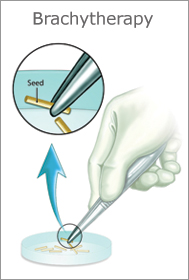
Brachytherapy also known as prostate seed implants, is a kind of internal radiation treatment for prostate cancer. Radioactive brachytherapy implant seeds to the prostate cancer. Brachytherapy prostate cancer requires the use of ultrasound and template guided insertion of radioactive seeds into the gland. The brachytherapy seeds will wipe out the cancer cells in the prostate.

History of Brachytherapy Prostate Cancer

It was recorded that around the year 1901, not long after the uncovering of radioactivity, Pierre Curie from France is the 1st to suggests the use of radioactive isotopes for treating cancer. Approximately the same time, Alexander Graham Bell of America also suggested it which started the involvement in refining the science within the medical profession.  Henri-Alexandre Danlos of the Curie Institute in France and Robert Abbe of St. Luke's Memorial Hospital in New York are 2 initiators of brachytherapy, begin testing the idea of contracting the tumors by exposing it to radioactive materials.  These early evolutions offered involvement into the effects of radiotherapy.

In 1970's, numerous medical centers starts to employed brachytherapy to prostate cancer treatment.  Radioactive seeds were localised using an unfold operative method, whereby the the operating surgeon would apply a finger positioned in the rectum to distinguish the rough localisation of the tumor and direct the radioactive material accordingly. 

Following up of these early cases in the long run often found unsatisfactory results and the cancer control can not be predicted. These results were the consequence of technical unfitness to precisely lay the seeds and lack of decent means to judge the intensity of the prostate gland to formulate an effective dose during that time.

During the late 80's and early 90's the innovation of transrectal ultrasound came forth, providing better evaluation of the prostate.  This progression immediately dealt with the demand for better estimation of the prostate volume.  With the combination of the template guidance, or precise needle positioning of radioactive seeds, Magnetic Resonance Imaging (MRI) and Computed Tomography (CT) technical advancement the issues of the early years were addressed. Advanced brachytherapy is reckon a viable treatment for prostate cancer.

Types of Brachytherapy for prostate cancer

There are two types of brachytherapy, high dose rate (hdr) brachytherapy prostate cancer and low dose rate (ldr) brachytherapy prostate cancer.

Low dose brachytherapy prostate cancer is more commonly used. During the process, brachytherapy seeds are implanted into the prostate cancer using a ultrasound guidance. The number of brachytherapy seeds and their placements are dictated by a computer generated therapy plan for individual patient. The seeds are place permanently in the prostate until it become expire after a few months.

High dose rate brachytherapy for prostate cancer is a newer therapy and requires the impermanent arrangement of hollow needles in the prostate. They are filled with a radioactive substance for few minutes and then extracted. This is replicated 2 to 3 more times over a period of several days.

Brachytherapy For Prostate Cancer Criteria

Brachytherapy may be an option for patients with lower Gleason score, lower PSA level and a tumour that has not outspread to other area of the body. If there is a higher likeliness that the prostate cancer may have spread to the surrounding tissues of the prostate, patients may be offered a short course of external beam radiotherapy before going through a brachytherapy implant. This combining therapy provides a more allowance to treat the tissue around the prostate.

Brachytherapy For Prostate Cancer Procedure

Brachytherapy prostate cancer is carried out in two stages:

Stage 1, is the volume study. A catheter is temporarily inserted into paient's urethra during the volume study under anaesthetic condition. This is to identify the structure. There might be slight discomfort during the first urination after the brachytherapy prostate cancer procedure.

Stage 2, is the implantation process of the brachytherapy seeds. The procedure is also executed under anaesthetic condition. Brachytherapy seeds are introduced under transrectal ultrasound guidance, using needles that go through through the skin of the perineum which is behind the scrotum. Each needle may render 2 to 6 seeds and, usually, 20 to 30 needles are necessary to have 80 to120 seeds implanted. Majority of the seeds inserted are woven into a filament of absorbable material to aid in preserving their position and will remain permanently in place.

A catheter is once again inserted into the urethra under anaesthetic condition which will remain for a few hours after the procedure.  X-rays are filmed throughout the brachytherapy prostate cancer procedure, to ascertain the position of the brachytherapy seeds.

Brachytherapy For Prostate cancer Precautions

Specific precautions is necessary where the patient's partner is pregnant at the time of implantation. The followings are general recommendations for the first two months after Brachytherapy seed implantation:

  • To avoid sex for the 1st two weeks
  • Subsequently after the 1st two weeks, advise to use a condom during sex to prevent the seed from passing during ejaculation
  • Avoid close contact with pregnant women and children.
  • Avoid children to sit on lap for long periods of time
  • If travelling to other countries is unavoidable, consider carrying a mediacal card to indicates that you have had a prostate seed implant in case of any  radiation detectors encounter at checkpoints. .

Tags:
Brachytherapy Prostate Cancer
What Is Brachytherapy For Prostate Cancer
History of Brachytherapy Prostate Cancer
Types of Brachytherapy for prostate cancer
Brachytherapy For Prostate Cancer Criteria
Brachytherapy For Prostate Cancer Procedure
Brachytherapy For Prostate cancer Precautions
Brachytherapy For Stage 3 Prostate Cancer
Brachytherapy For Prostate Cancer Young Men
Best Brachytherapy Prostate Cancer
Brachytherapy Cured My Prostate Cancer
Define Brachytherapy Prostate Cancer
Brachytherapy Localised Prostate Cancer
Brachytherapy Implant Prostate Cancer
Brachytherapy For Localized Prostate Cancer
Brachytherapy For Clinically Localized Prostate Cancer Optimal Patient Selection
Brachytherapy Metastatic Prostate Cancer
Brachytherapy Of Prostate Cancer
Prostate Cancer Treatment Options Brachytherapy
Brachytherapy For Prostate Cancer Pdf
Treating Prostate Cancer With Brachytherapy
Brachytherapy Stage 4 Prostate Cancer
Brachytherapy Seeds For Prostate Cancer
Brachytherapy Seeds Prostate Cancer
High Dose Rate Brachytherapy Prostate Cancer
High Dose Brachytherapy For Prostate Cancer
Hdr Brachytherapy Prostate Cancer
High-dose Rate Brachytherapy Prostate Cancer
High Dose Brachytherapy Prostate Cancer
Low Dose Brachytherapy Prostate Cancer
Low Dose Rate Brachytherapy Prostate Cancer
Ldr Brachytherapy Prostate Cancer
Hdr Brachytherapy Procedure Prostate Cancer

Proton Beam Therapy Prostate Cancer

Proton Beam Therapy Prostate Cancer
Proton beam therapy prostate cancer is a type of beam radiation therapy for prostate cancer treatments. Proton beam therapy is a form of radiation treatment that utilizes protons instead of x-rays to address cancer. A proton is a positively loaded atom with the basic unit of chemical elements, like hydrogen or oxygen. Protons is use to demolish cancer cells at high-power.

In America, prostate cancer is the second leading cause of cancer death in men, but if it is detected early, prostate cancer has approximately 99% 5-year survival rate.

The initiative to use high powered protons for medical therapy was in year 1946. Within 10 years from then, proton treatment was started out for patients with certain cancers. Research and laboratory centers practical application had increased speedily following the next 30 years.

In 1974, proton beam therapy was initiatory used for cancer therapy in America at a physics research laboratory. The first United States of America hospital based proton facility started treating cancer patients in 1990. More than tens of thousands of people have received proton beam therapy in the U.S.A. since then. The number of proton therapy locations in United States or centers that offer this proton beam therapy is rising but is still consider small scale.

Prostate cancer happens when cancer cells in the prostate develop and manifold uncontrollably, damaging encompassing tissue and intervening with the normal role of the prostate. The prostate is found below the bladder, which is in front of the rectum, cancer cells can potentially disperse to other parts of the body

Conventional radiation treatment can cause damage to the tissue beside the tumor. The bladder and surrounding areas can cause bowel or urinary incontinence due to traditional prostate cancer treatments, which can greatly reduce any unnecessary side effects.

Proton beam therapy prostate cancer confines the radiation to the tumor itself, patients have a higher percentage of avoiding any urinary complications side effects, such as involuntary outflow.

One of the proton beam therapy bad results are that there's no follow up pathology comparing to surgery, PSA test is somehow the only way to know whether patient is cancer free. There could also be rectal side effects, since the front of the rectum suffers radiation during the procedure. A small percentage could get serious rectal issues that require further treatment, while some may suffer temporary constipation, etc.

A observational study shows that men treated with proton beams develops bowel problems, such as bleeding and blockages comparing to men who underwent conventional radiation, but since it is just observational, hence, it is not definitive.

Proton beam therapy for prostate cancer generally has little to no recovery time after therapy. The chances of having post treatment impotency is reduced. Most patients can endure the therapy and are capable to continue working, exercising and continue sexual activity after their proton beam therapy for prostate cancer.

Radiation Therapy For Prostate Cancer After Surgery

Radiation therapy for prostate cancer after surgery may be necessary when the PSA sets off to move up after post-prostatectomy. Normally, after surgery the PSA should be undetectable subsequently approximately a month. Salvage radiation therapy for prostate cancer may be a sound alternative to consider. Occasionally, radiation therapy after prostatectomy prostate cancer is applied for men with high risk disease even if PSA level did not increase.

For the radiation therapy, external beam radiation is presented to the region directly encompassing where the prostate is, in the desires to eradicate whatever unexpended prostate cancer cells that have remain behind. Radiation therapy following prostate cancer surgery is not necessary to be carried out immediately, and can be done later after confirming the increase of the PSA value may often be more reasonable.

Radiation Treatment For Prostate Cancer Side Effects

Not everyone is suitable for the radiation therapy as there could  be side effects of radiation therapy for prostate cancer after surgery if there are visible places of disease of the immediate local area externally, if any tumor cells have been discovered in the lymph nodes, or if the Gleason score was around 8-10, post-surgery radiation therapy may not be suitable for you. The decision to apply radiation therapy to reduce the risk of recurrence and passing from prostate cancer after surgery is established on whether the cancer cells has overspread to other area.

About 25-33% of men with prostate cancer will get a prostate cancer recurrence after surgery or radiation therapy. Some of them can still be recovered after going through radiation therapy again for the prostate cancer recurrence. Further treatment for prostate cancer recurrence after radiation therapy is commonly still very beneficiaries. Follow up with prostate cancer recurrence treatment will depend upon where the cancer is believed to be and what treatment(s) have the patient gone through already or with other local treatment for prostate cancer after surgery and radiation. However, some men may build up a form of prostate cancer that may not be curable but stays maintainable for a very long time. Continue reading on radiation therapy vs surgery for prostate cancer...

Radiation Therapy vs Surgery For Prostate Cancer

Read about radiation therapy vs surgery for prostate cancer explanation to narrow down the choices to two – surgical removal of the prostate or radiation therapy.

Radiation therapy for prostate cancer after surgery is normally conducted if PSA rises. Radiation therapy uses high-energy rays or particles to kill cancer cells. Radiation may be used:

1. As the beginning treatment for low-grade cancer which is just in the prostate gland. Curing rates for men with these types of cancers are about the same as those for men getting radical prostatectomy.
2. As part of the foremost treatment (along with hormone therapy) for cancers that have developed outside of the prostate gland and into nearby tissues.
3. If the cancer isn't got rid of completely or recurs in the area after surgery for prostate cancer.
4. If the cancer has advances, to subdue the size of the cancer and to allow easing from present and possible future symptoms.

The 2 main types of radiation therapy for prostate cancer are external beam radiation and brachytherapy (internal radiation). Both seem to be good methods of treating prostate cancer, although there is more long-term information about the results with external beam radiation.

The advantage of radiation therapy vs surgery for prostate cancer is that it is simple to go through than surgery.  Even with robotic technology, its small surgical incision are not as little as the openings created by a few dozen needles inserted into the skin behind the scrotum when radiation seeds are embedded.  General recovery from robotic prostatectomy is usually 2-3 weeks, whereas recovery from radioactive seed implantation is 1-2 days.  Many patients who take the radiation route will likewise have daily external beam therapy for 6-7 weeks.

The prostate cancer radiotherapy side effects involves difficultness in emptying the bladder.  In severe cases, patients can feel debilitating frequent urination (including countless disturbances of sleep), reduced urinary flow, and hurting with urination.  The urinary complications of radiation therapy occur in a small minority of patients on a lasting basis, but these conditions can be much harder to manage than the infrequent urinary issues related with prostate removal.  Moreover, in those patients who already have frequent urination (day or night) or reduced urinary flow, the likeliness of long-lasting symptoms following radiation therapy rises dramatically.   In fact, patients with these pre-existent symptoms would majority notice an improvement after prostate removal.

The advantage of surgery vs. radiation for treatment of prostate cancer is the data learned that is not available through other treatment methods.  Once the prostate is got rid of, it can be fully examined to ascertain the extent, location, and grade of the disease within the prostate and seminal vesicles and lymph nodes if required.  More importantly, the ability to supervise a patient for potential recurrence is dramatically raised.  When the prostate is took away, the PSA blood test should become undetectable in 6 weeks if all the cancer cells have been eliminated with success. 

Radiation Therapy vs Surgery For Prostate Cancer

The prostate cancer side effects after surgery is the small possibleness of long-lasting bladder control problems.  For those below age 65, less than 5% will have any significant post-operative bladder problems. The risk of incontinence following radiation is 1-2%.

Several factors come in when deciding the best therapy for treating prostate cancer. These include pre-existent symptoms, PSA level, extent/volume of disease, age, Gleason grade and emotional factors.  Whether choosing radiation therapy vs surgery for prostate cancer, extensive experience of the treating doctor is crucial in order to maximise a effective outcome.

Can You Live Without A Prostate

Can You Live Without A Prostate
Can you live without a prostate or can a man live without a prostate? The prostate is about the size of a small walnut, it is situated between the pelvic floor and bladder in males and it is a gland that secretes fluid that helps with the male reproductive process which is needed for sexual function. It is not considered a vital organ, though there are plenty of opinions to the contrary. Prostate removal is usually done to prevent the spread of prostatic cancer. Read more on --> Where Does Prostate Cancer Spread To. While it is possible to live without your prostate, there are inconvenient many side effects associated with the procedure.


Should I have Prostate Surgery to Remove Prostate?

Various conditions can affect the prostate gland, including prostatitis and prostate cancer. Prostate can be removed when prostate cancer is detected. Removal is only used at stage 1 prostate cancer. The removal is to prevent the cancer from spreading to other parts of your body. In most cases, this will cure the cancer and you can live without a prostate.

How Long Can You Live Without A Prostate?

The prostate does not perform any functions that are vital to life, hence prostate removal does not affect your longevity. However, there are prostate cancer side effects after surgery.


Life Without Prostate Gland, The Prostate Removal Consequences

You can produce semen without a prostate gland, but its contents will be slightly different. Semen contains fluids from the testicles, seminal vesicles, prostate, and bulboure. As the prostate carries fluids that the sperm live off of so even you can produce semen, the sperm may not live long. You would need to have in vitro or artificial insemination done to produce a child from your own sperm.

Incontinence and impotence are consequences after prostate removal. People will have trouble controlling their bladder in the first few days, some experience incontinence as a long-term side effect. Doctor may suggest pelvic exercises or surgery to correct the problem. Impotence may also occur from nerve damage during the surgery but you can treat this side effect with drugs or penile implants.   

Prostate Cancer Treatment Guidelines

This prostate cancer treatment guidelines aims to make sure that men are given info concerning the treatment choices offered, even though they're not offered domestically, in addition as facilitate selecting the most effective choice to suit them.

The updated guideline includes variety of recent recommendations on the swift designation and treatment of various stages of the prostate cancer and a replacement protocol for men, that involves regular check-ups to envision the way the cancer is developing, instead of radical treatment. The aim of this guidelines are to make sure that wonderful treatment is provided for men.

Prostate cancer is that the commonest cancer in men. In 2010, many men were diagnosed with the prostate cancer. Three-quarters of glandular cancer cases area unit diagnosed in men over the age of sixty five.

The prostate cancer treatment guideline includes:

- Doctors ought to discuss all relevant treatment and diagnostic choices with men with glandular cancer and their partners or carers, regardless of whether or not they are obtainable through native services.

- Doctors ought to think about a specialised style of imaging scan referred to as multiparametric prostate imaging. This enables higher assessment of the ductless gland than commonplace imaging or ultrasound scans. A multiparametric imaging improves the detection of clinically important tumours, reduces the detection of clinically insignificant tumours and might guide biopsies a lot accurately. The rules counsel use of this sort of scan for men have had negative biopsies to assist cut back gratuitous repeat procedures.

- Doctors ought to provide active investigation as associate choice to men with low-risk localised glandular cancer for whom radical ablation or radical actinotherapy is appropriate.

- Provide men with intermediate and unsound localised glandular cancer a mixture of radical radiation therapy and sex hormone deprivation therapy, instead of radical radiation therapy or sex hormone deprivation therapy alone. Steroid hormone deprivation medical care may be a hormone treatment that reduces levels of male hormones.

- Think about active investigation for men with intermediate-risk localised glandular cancer to immediate radical ablation or radical actinotherapy.

Read about Proton Beam Therapy Prostate Cancer

Hormone Treatment For Prostate Cancer Side Effects

Chemically or surgically hormone treatment can be use to remove the supply or block the action of testosterone because prostate cancer cells depend on the male hormone testosterone for growth. It works by starving the prostate cancer of its fuel supply but leads to other side effects relating to testosterone deficiency.

The most common hormone treatment for prostate cancer side effects include:

1. Impotence or erection problems and lack of sexual desire
2. Mild weight gain around the abdomen
3. Hot flushes
4. Mood swings
5. Lethargy, lack of energy and reduced sex drive
6. Weight loss on the arms and legs
7. Swelling and discomfort around the breast area or breast tenderness
8. Changes in appetite
9. Depression and loss of bone strength (osteoporosis)
        
These side effects of hormone treatment for prostate cancer can vary in their intensity from mild to more significant. It is important to talk with your doctor for ways to minimise their impact on your day-to-day life.

Nevertheless, there are several reasons to use hormone treatment for prostate cancer. These include;
1. Men not suitable for, or would not benefit from radical treatment
2. When the prostate cancer has returned after radical treatment
3. Before treatment with radiotherapy

Hormone treatment can be used in men with various degrees of prostate cancer. Normally, it is primarily used if prostate cancer has overspread outside the prostate. It doesn't cure the cancer. The intent of hormone therapy is first to delay the advancement of the cancer and second to increase survival rates while maximizing quality of life. Factors to consider when deciding whether to go for hormone treatment for prostate cancer are quality of life, cost of the treatment, and how effective and safe hormone treatment may be in a particular case.

If a patient doesn't react to initial hormone treatment, a doctor may try other hormonal therapy prior to recommending chemotherapy.

Read about Proton Beam Therapy Prostate Cancer

Prostate Cancer In Men Under 30

Clearly, prostate cancer is not just an "old man's" disease. While it probably true that the older you are, the more potential you are to be diagnosed with prostate cancer (65% of cases are diagnosed in men who are 65 or older), the fact remains that 35% of those diagnosed, or over 76,000 each year, are diagnosed at an earlier age or even prostate cancer in men under 30.

There are many risk factors to consider. Your race, family history, physical health and lifestyle—even geographic location—are all factors that can increase your likeliness of developing prostate cancer.

Prostate cancer is one of the most symptomless cancers in oncology, meaning not all men experience symptoms. A lot of times symptoms can be misidentified or imputed to something else. Signs of prostate cancer are frequently first noticed by a doctor during a routine check-up. Common symptoms consists of the need to urinate frequently, difficultness to start or stop urination, painful or burning urination, weak or interrupted flow of urination, trouble having an erection, blood in the urine or semen, painful ejaculation, or frequent pain and stiffness in the lower back, hips or upper thighs. If you undergo any of these symptoms, make sure you tell your doctor.

The cause of prostate cancer is unknown, but the cancer is thought unrelated to benign prostatic hypertrophy (BPH). The risk (predisposing) factors for prostate cancer include advancing age, genetics (heredity), hormonal influences, and such environmental factors as toxins, chemicals, and industrial products. The chances of developing prostate cancer increase with age. Thus, prostate cancer in men under age 30 is extremely rare, while it is more common in men older than 80 years of age. As a question of fact, some reports have indicated that among men over 80, between 50 to 80 percent of them may have prostate cancer!

There are no specific measures recognized to prevent the development of prostate cancer. Therefore, we can only hope to prevent progression of the prostates cancer by making early diagnoses and then attempting to cure the disease. Early diagnoses can be made by screening men for prostate cancer. Screening can be done by routine yearly digital rectal examinations.

Where Does Prostate Cancer Spread To?

Overview of prostate cancer

As men age, the prostate cancer growth, eighty years of age to check for prostate cancer generally occurs in patients with cancer lesions, but the actual clinical onset is much lower than this number, prostate cancer is one of the main men in Europe cancer deaths. There are significant regional and ethnic differences in the incidence of prostate cancer, according to statistics the Chinese people minimum, maximum Europeans, Africa and Israel, intermediate, and Japan and other countries of prostate cancer of low-prone areas, but there was no choice in men over the age of 50 autopsy prostate biopsy sections found that the potential number of cancer lesions similar to the U.S. and Europe, so some people think Asians than Westerners slow cancer growth, fewer clinical cases. Also the relationship between prostate cancer and the environment also.

Second, the proliferation of prostate cancer genetic markers


Scientists have confirmed that there are some genetic markers that can help us determine whether the proliferation of prostate cancer will occur, or will be confined to the prostate. Such studies will eventually be able to help doctors and patients decide which treatment best take. Compared with advanced prostate cancer, there are obvious limitations of genetic differences in prostate cancer within the prostate.

Many prostate cancer patients may have no symptoms for years, but the other part of the lesion in patients with advanced prostate cancer will progress rapidly. In the United States resulted in men with prostate cancer is the second cause of death, but the choice of the appropriate method of treatment is very difficult. Sometimes, prostate cancer can spread to other parts of the body, making treatment very difficult. But other lesions in patients with prostate cancer is confined to the prostate internally. Some of prostate cancer treatment is effective, but may cause long-term adverse effects, including impotence and incontinence. Plays a very important role in the process of tumor development and progression of these genes exist in chromosomal regions.

Third, the proliferation of drugs to prevent prostate cancer


Early detection of prostate cancer, such as testosterone rely on male hormones like growth phase of cancer in this way is the use of drugs that inhibit or block the effect of hormones on the cancer cells, but anti-hormone therapy to slow the spread of cancer, However, cancer cells will gradually become more rely on hormones, but to make the cancer cells more vitality.    

Anti-hormonal therapy for early detection of prostate cancer cells inhibited effective, but for advanced prostate cancer found invalid, even if the drug treatment of advanced cancer can usually pharmaceutical ingredients also has considerable toxicity, not necessarily effective, and therefore it is expected to slow down the process of cancer which no longer rely on growth hormone.
    
Component of anti-inflammatory drugs have been shown to inhibit the growth of prostate cancer cells, but both have cardiovascular side effects, so the group decided to combination therapy as a research direction, under the same understanding of the effect of the two drugs to enhance the inhibition of cancer development, and two drugs in order to reduce the side effects of the reduction of the two drugs.
    
After two years of using a single drug, two different combinations of drugs and other medication animal experiments, experts pointed out that experiments confirmed that the two drugs to reduce weight, while medication, comparing a single high dose of medication, show significant results.

Fourth, the proliferation of food to prevent prostate cancer

1. Soybean
Soy contains an antioxidant called genistein almost completely curb the proliferation of prostate cancer cells in mice. Northwestern University researchers experiments in mice showed that mice taking genistein chance of prostate cancer metastasis to the lungs reduced by 96%. Genistein content used in the experiment it is equivalent to the amount of people from rich soy meal diet intake.

In stopping the proliferation of prostate cancer cells, genistein might be able to produce a certain effect. Although genistein does not make prostate tumors smaller, but it's almost completely prevented prostate cancer metastasis to the lungs.

2. Tea

Multifaceted protective effects of tea on human health has been brought well known. Black and green tea have the effect of slowing the proliferation of prostate cancer, and antioxidants of red wine and peanuts are rich inside but can not produce effective anti-cancer effect.

Tea polyphenols in prostate cancer cell growth inhibition. The effect of black tea better. In countries like tea drinking, the incidence of certain cancers is relatively low. Meanwhile, recent scientific studies show that not all polyphenols can produce anti-cancer effects. For example, resveratrol edge A is present in red wine and peanuts in polyphenols can not produce the same anti-cancer effect.

Hormone Injection For Prostate Cancer

Prostate cells require male hormones testosterone, called Androgens, to develop and function normally. The objective of Hormone Injection is to minimise the amount of male hormones in the body so that prostate cells are not caused to grow. So lowering the amount of testosterone in the body can reduce the chance of an early prostate cancer coming back after treatment. Or it can shrink an advanced prostate tumour down or slow its growth.

Hormone injection therapy depends on the grade and stage of your cancer. Doctor may suggest hormone treatment alone if your cancer has spread to another part of the body. Or they may suggest it if the cancer has grown too far around the prostate for successful treatment with surgery or radiotherapy. It may also be use before radiation to try to shrink the cancer to make treatment more effective.

Hormone injection medicines reduces the production of the male hormone, testosterone, from the testicles. These medicines are given by injection into a muscle every few months.

Possible side effects include:
1. Impotence
2. Hot flashes
3. Loss of sexual desire
4. Osteoporosis
5. Fatigue
6. Weight gain
7. Strength and muscle loss
8. Breast swelling and tenderness
9. Loss of body hair
10. Bone thinning
11. Memory and concentration problems
12. Changes to your mood.
13. Increased risk of heart disease and diabetes

The side effects are caused by lowered testosterone levels. They usually last for as long as you’re on hormone injection therapy. If you stop your hormone injection therapy, your testosterone levels will gradually rise and the side effects should improve. But this might take several months

Hormone injection may control the cancer for a few years then the cancer usually will stops responding to the hormone injection treatment and starts to grow again.